 DE
DE EN
EN
The “Lange Nacht der Forschung 2026” (Long Night of Research) is Austria’s largest event dedicated to science, research and innovation. On 24 April 2026, K1-MET GmbH will be present at three locations – Linz, Leoben and Tulln – offering exciting insights into sustainable metallurgical research.
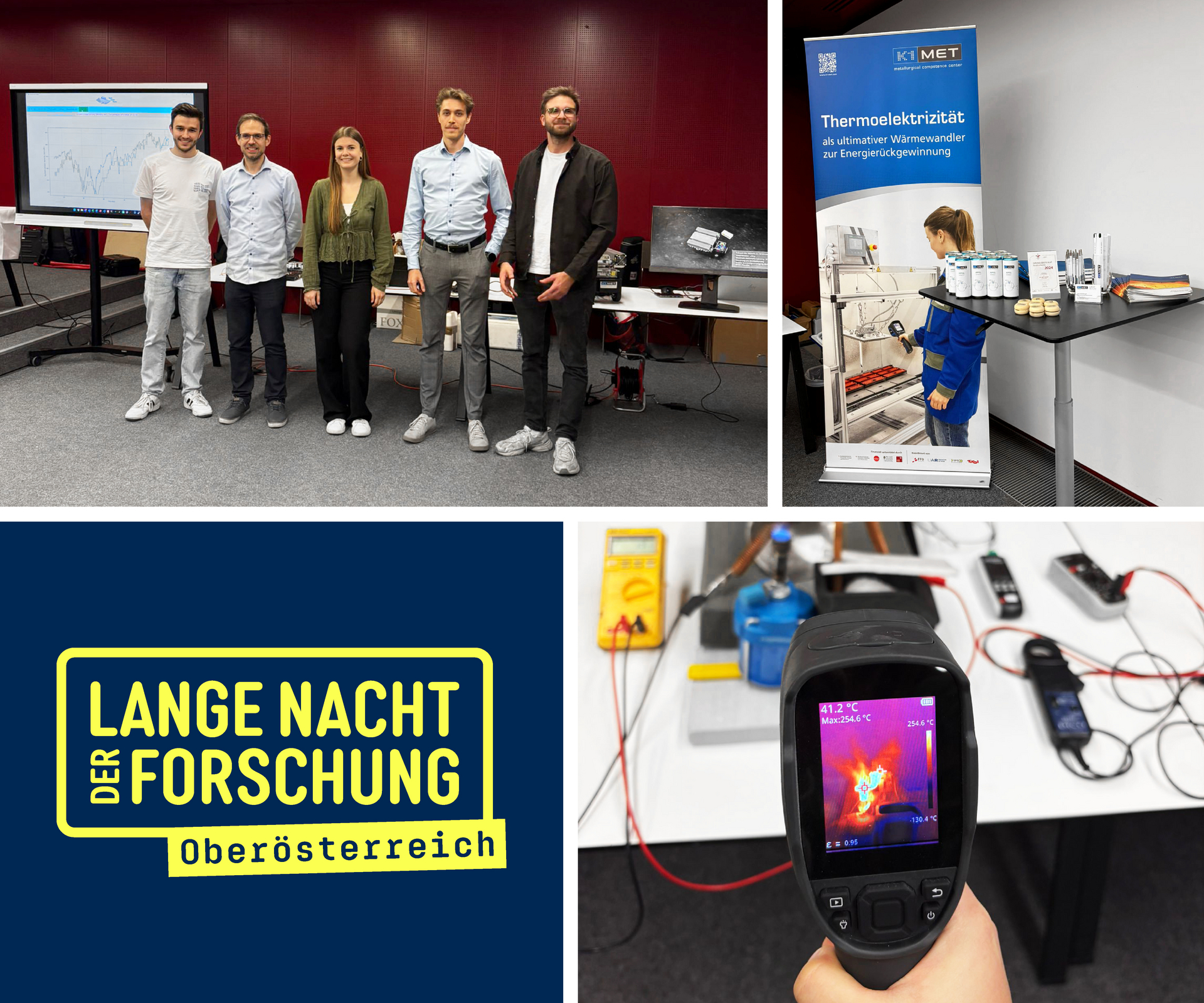
Linz: Thermoelectricity as the ultimate heat converter for energy recovery
Ars Electronica Center Linz (Ars-Electronica-Strasse 1, 4040 Linz)
Visitors explored how heat can be directly converted into electrical energy. Through demonstrations and hands-on experiments, guests gained insights into the physical principles of thermoelectricity and learned how industrial waste heat can be used more efficiently. The interactive setup allowed visitors to experience how thermoelectric materials convert heat into electricity and highlighted the potential of this technology for increasing energy efficiency in industry.
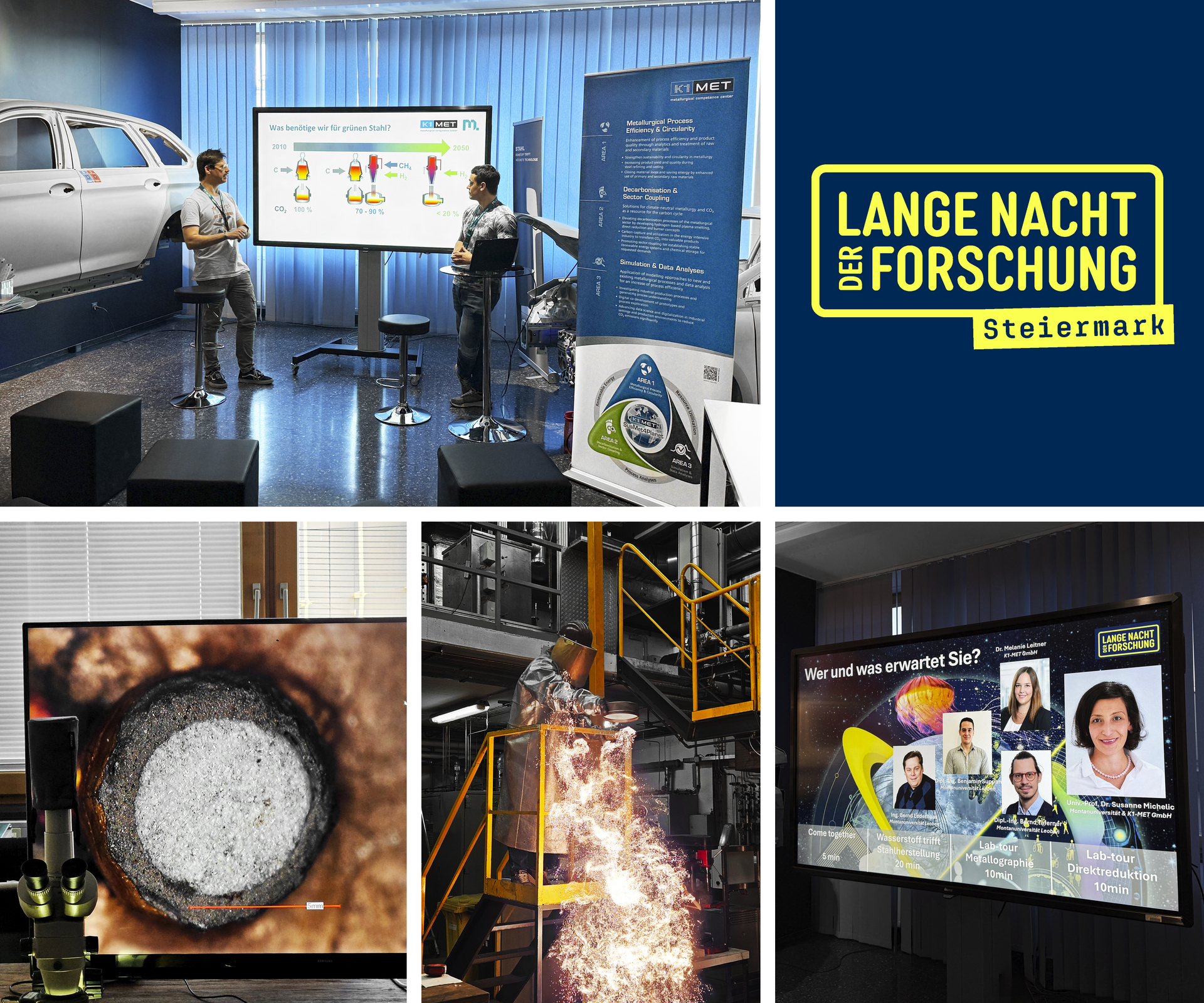
Leoben: What makes steel sustainable?
Technical University of Leoben (Franz Josef-Strasse 18, 8700 Leoben, Metallurgiegebaeude, 2nd floor, foyer of the Chair of Ferrous Metallurgy)
In Leoben, the station Sustainable Steel Experience was presented by the Chair of Ferrous Metallurgy at the Technical University of Leoben together with the metallurgical competence center K1-MET GmbH. Visitors attended a short expert lecture providing insights into climate-friendly and sustainable steel production, with a focus on low-CO2 production routes, mobility and metallic materials. The programme also included interactive elements for younger participants: children were able to examine various samples under the microscope, gaining hands-on insight into microstructures. This was complemented by a guided tour through the metallography facilities as well as a visit to the direct reduction laboratory, where a live experiment was demonstrated.
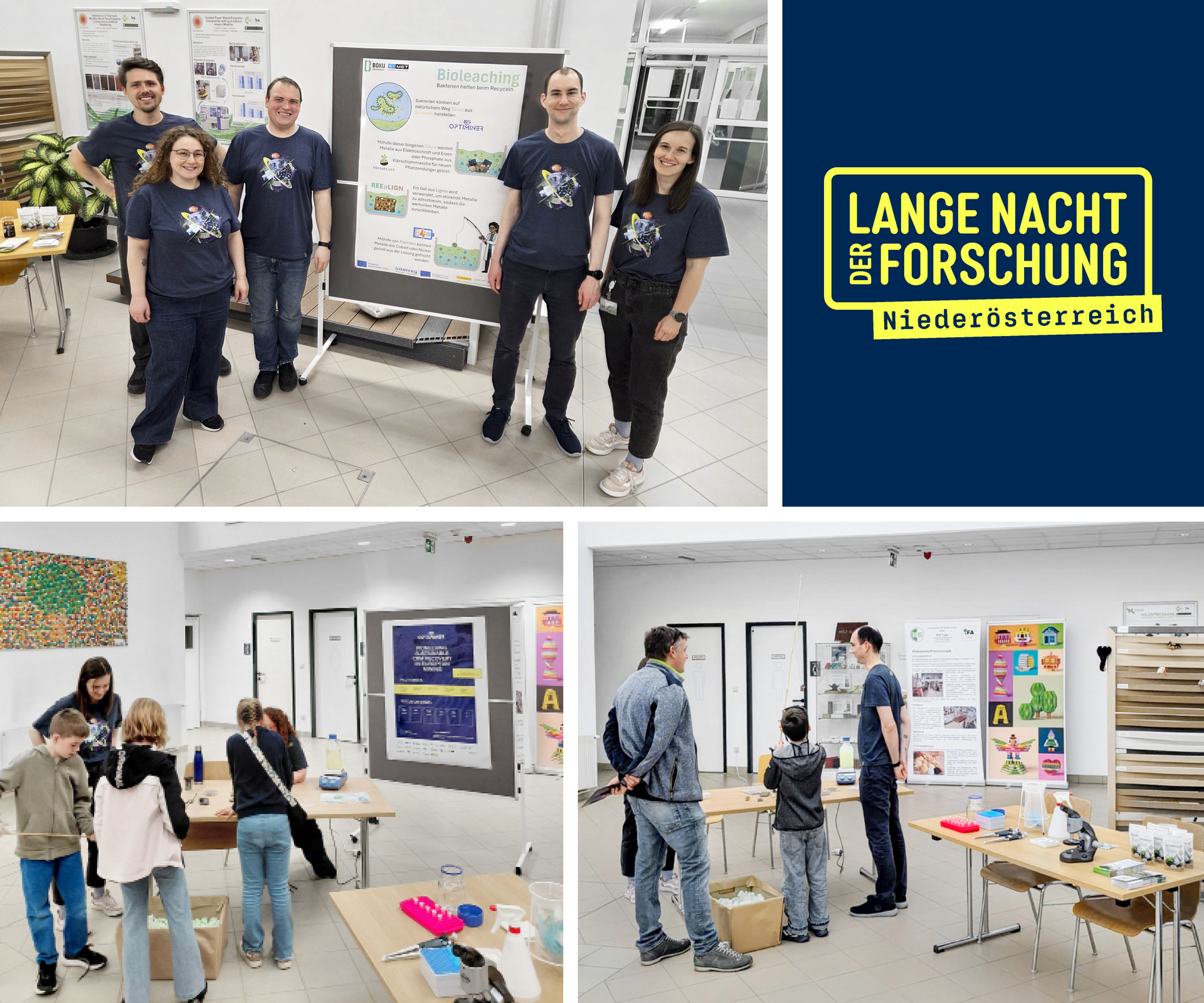
Tulln: Waste as a resource: How microorganisms and biomolecules support metal recovery
IFA-Tulln, BOKU University (Konrad-Lorenz-Strasse 20, 3430 Tulln)
The station demonstrated how microorganisms can dissolve valuable metals from electronic waste such as old mobile phones or laptops. Using biomolecules, these metals can then be selectively recovered from complex mixtures. Visitors had the opportunity to conduct small experiments themselves, pipetting solutions, examining electronic waste and testing how specific metals can be separated from mixtures. The station provided an accessible introduction to innovative approaches for resource recovery and circular materials management.
K1-MET would like to thank all visitors for their interest, as well as UAR – Upper Austrian Research GmbH for coordinating the event in Linz, the Technical University of Leoben for the collaboration in Leoben, and BOKU University (IFA-Tulln) for the cooperation in Tulln.